 Mag-it
Fishing Bait Vending
Mag-it
Fishing Bait VendingMaggots as Fishing Baits
Show me maggots and I immediately think of fishing bait. A fly, specially bred as the parent of our fishing bait, lays its eggs on liquidised meat and fish. Five to ten days after hatching the maggots are drinking only liquids at which stage they pupate for 14 days. After the first day or so the pupae is of no use as fishing bait: it now floats rather than sinks.
Development of the maggot can be retarded for up to six weeks by refrigeration. Hence English coarse fisherman can buy maggots (natural shade or coloured) from "Mag-it" vending machines
 Mag-it news
A leading brand of soft pellets (for
carp, tench, roach and bream) is
now available in "Mag-it" vending machines.
Instructions for their
use are on each machine.
The machines are usually stocked with
white, red and mixed maggots,
and red worms.
Using Mag-it maggots
Never forget the value of pre-feeding at your chosen spot for at least 30 minutes and continuing to feed whilst actually fishing.
Time to use our maggot as fishing bait.The maggot has a sharp and blunt end, the latter clearly recognisable by two "eye holes". Lightly hook the loose skin at the blunt end. Tip: if you use two maggots on a hook then hook one at the sharp and one at the blunt end; this prevents the "helicopter effect" of the line twisting as it's drawn through the water.
Left with some maggots after a day's fishing, discover pupae from a forgotten purchase? Don't despair; the humble maggot can still be used as food for any pet that can eat an insect of that size.
Alternatively you could deliberately allow some of the good quality "Mag-it" maggots to pupate and turn into a chrysalis. Put the maggots in a well-ventilated storage container furnished with a moist, small particle medium such as sawdust. Remember, the speed of development is temperature sensitive: it's all just a matter of practical experience. Sieve regularly to remove any dead maggots and then, finally the casters. Now to use the caster as fishing bait: put the hook into the "blunt" end; turn the hook so you can ease the caster on as far as the hook spade and no further.
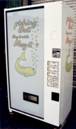
Finding a Mag-it Vending Machine
You can find "Mag-it" bait at over forty locations in the East of England, usually near to popular fishing spots.
The links in the lists below should point to addresses and maps ...
(If you think there are errors in the site information below, please let us know by using the contact link at the top of the page.)